Times tables 1–12 · 12 multiplication games · free
Multiplication.com: Free Multiplication Games and Times Tables for Kids
Multiplication.com is the leading resource for helping kids learn the times tables and multiplication facts. Play free multiplication games, look up any fact on the 12 × 12 chart, and practice a few minutes a day.
- Times tables 1 to 12
- No downloads or sign-up
- No ads inside games
- Phones, tablets and Chromebooks
Free Multiplication Games
All multiplication games →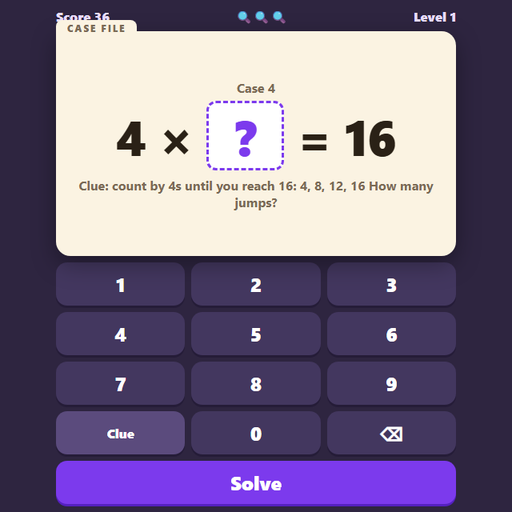
Multiplication Chart 1 to 12
Find a number in the top row and a number in the left column. The square where they meet is the product. Hover or tap a square to highlight its row and column.
| × | 1 | 2 | 3 | 4 | 5 | 6 | 7 | 8 | 9 | 10 | 11 | 12 |
|---|---|---|---|---|---|---|---|---|---|---|---|---|
| 1 | 1 | 2 | 3 | 4 | 5 | 6 | 7 | 8 | 9 | 10 | 11 | 12 |
| 2 | 2 | 4 | 6 | 8 | 10 | 12 | 14 | 16 | 18 | 20 | 22 | 24 |
| 3 | 3 | 6 | 9 | 12 | 15 | 18 | 21 | 24 | 27 | 30 | 33 | 36 |
| 4 | 4 | 8 | 12 | 16 | 20 | 24 | 28 | 32 | 36 | 40 | 44 | 48 |
| 5 | 5 | 10 | 15 | 20 | 25 | 30 | 35 | 40 | 45 | 50 | 55 | 60 |
| 6 | 6 | 12 | 18 | 24 | 30 | 36 | 42 | 48 | 54 | 60 | 66 | 72 |
| 7 | 7 | 14 | 21 | 28 | 35 | 42 | 49 | 56 | 63 | 70 | 77 | 84 |
| 8 | 8 | 16 | 24 | 32 | 40 | 48 | 56 | 64 | 72 | 80 | 88 | 96 |
| 9 | 9 | 18 | 27 | 36 | 45 | 54 | 63 | 72 | 81 | 90 | 99 | 108 |
| 10 | 10 | 20 | 30 | 40 | 50 | 60 | 70 | 80 | 90 | 100 | 110 | 120 |
| 11 | 11 | 22 | 33 | 44 | 55 | 66 | 77 | 88 | 99 | 110 | 121 | 132 |
| 12 | 12 | 24 | 36 | 48 | 60 | 72 | 84 | 96 | 108 | 120 | 132 | 144 |
Square numbers sit on the diagonal: 1, 4, 9, 16, 25 and so on.
Times Tables From 1 to 12
1 Times Table
- 1 × 1 = 1
- 1 × 2 = 2
- 1 × 3 = 3
- 1 × 4 = 4
- 1 × 5 = 5
- 1 × 6 = 6
- 1 × 7 = 7
- 1 × 8 = 8
- 1 × 9 = 9
- 1 × 10 = 10
- 1 × 11 = 11
- 1 × 12 = 12
2 Times Table
- 2 × 1 = 2
- 2 × 2 = 4
- 2 × 3 = 6
- 2 × 4 = 8
- 2 × 5 = 10
- 2 × 6 = 12
- 2 × 7 = 14
- 2 × 8 = 16
- 2 × 9 = 18
- 2 × 10 = 20
- 2 × 11 = 22
- 2 × 12 = 24
3 Times Table
- 3 × 1 = 3
- 3 × 2 = 6
- 3 × 3 = 9
- 3 × 4 = 12
- 3 × 5 = 15
- 3 × 6 = 18
- 3 × 7 = 21
- 3 × 8 = 24
- 3 × 9 = 27
- 3 × 10 = 30
- 3 × 11 = 33
- 3 × 12 = 36
4 Times Table
- 4 × 1 = 4
- 4 × 2 = 8
- 4 × 3 = 12
- 4 × 4 = 16
- 4 × 5 = 20
- 4 × 6 = 24
- 4 × 7 = 28
- 4 × 8 = 32
- 4 × 9 = 36
- 4 × 10 = 40
- 4 × 11 = 44
- 4 × 12 = 48
5 Times Table
- 5 × 1 = 5
- 5 × 2 = 10
- 5 × 3 = 15
- 5 × 4 = 20
- 5 × 5 = 25
- 5 × 6 = 30
- 5 × 7 = 35
- 5 × 8 = 40
- 5 × 9 = 45
- 5 × 10 = 50
- 5 × 11 = 55
- 5 × 12 = 60
6 Times Table
- 6 × 1 = 6
- 6 × 2 = 12
- 6 × 3 = 18
- 6 × 4 = 24
- 6 × 5 = 30
- 6 × 6 = 36
- 6 × 7 = 42
- 6 × 8 = 48
- 6 × 9 = 54
- 6 × 10 = 60
- 6 × 11 = 66
- 6 × 12 = 72
7 Times Table
- 7 × 1 = 7
- 7 × 2 = 14
- 7 × 3 = 21
- 7 × 4 = 28
- 7 × 5 = 35
- 7 × 6 = 42
- 7 × 7 = 49
- 7 × 8 = 56
- 7 × 9 = 63
- 7 × 10 = 70
- 7 × 11 = 77
- 7 × 12 = 84
8 Times Table
- 8 × 1 = 8
- 8 × 2 = 16
- 8 × 3 = 24
- 8 × 4 = 32
- 8 × 5 = 40
- 8 × 6 = 48
- 8 × 7 = 56
- 8 × 8 = 64
- 8 × 9 = 72
- 8 × 10 = 80
- 8 × 11 = 88
- 8 × 12 = 96
9 Times Table
- 9 × 1 = 9
- 9 × 2 = 18
- 9 × 3 = 27
- 9 × 4 = 36
- 9 × 5 = 45
- 9 × 6 = 54
- 9 × 7 = 63
- 9 × 8 = 72
- 9 × 9 = 81
- 9 × 10 = 90
- 9 × 11 = 99
- 9 × 12 = 108
10 Times Table
- 10 × 1 = 10
- 10 × 2 = 20
- 10 × 3 = 30
- 10 × 4 = 40
- 10 × 5 = 50
- 10 × 6 = 60
- 10 × 7 = 70
- 10 × 8 = 80
- 10 × 9 = 90
- 10 × 10 = 100
- 10 × 11 = 110
- 10 × 12 = 120
11 Times Table
- 11 × 1 = 11
- 11 × 2 = 22
- 11 × 3 = 33
- 11 × 4 = 44
- 11 × 5 = 55
- 11 × 6 = 66
- 11 × 7 = 77
- 11 × 8 = 88
- 11 × 9 = 99
- 11 × 10 = 110
- 11 × 11 = 121
- 11 × 12 = 132
12 Times Table
- 12 × 1 = 12
- 12 × 2 = 24
- 12 × 3 = 36
- 12 × 4 = 48
- 12 × 5 = 60
- 12 × 6 = 72
- 12 × 7 = 84
- 12 × 8 = 96
- 12 × 9 = 108
- 12 × 10 = 120
- 12 × 11 = 132
- 12 × 12 = 144
Ready to practice one table? Times Table Practice quizzes all twelve facts of any table and awards up to three stars.
More Free Games for Brain Breaks
More Math and Logic Games
Browse all 183 free games →
Recently Played Games
Welcome to Multiplication.com
Multiplication.com is a free resource for helping kids learn the times tables and multiplication facts. Here you can play free multiplication games, look up any fact on the 12 × 12 multiplication chart, and follow a simple plan that takes a child from 2 × 2 to 12 × 12 one step at a time. Everything runs in a web browser, with no download, no account and no payment.
We built Multiplication.com around one idea: the facts stick when practice is short, frequent and a little bit fun. A five-minute game after school does more than an hour of worksheets once a week. So every game on this site gives instant feedback, shows the correct answer after a mistake, and saves best scores on your device, so a child can see real progress from one day to the next.
Why Learning the Times Tables Matters
Multiplication facts are the building blocks for almost everything that comes after them in elementary and middle school math. Long multiplication, long division, fractions, area, ratios and algebra all lean on them. When a student has to stop and count up to find 8 × 7, their attention goes to the counting instead of the bigger problem in front of them.
Knowing the facts by heart, which teachers call fluency, frees that attention. A fluent student sees 56 and knows it is 7 × 8 without thinking about it. That makes it easier to simplify 56/64, to spot that 56 is divisible by 4, or to estimate a total at the store. It also builds confidence. Children who know their facts tend to feel that math makes sense, and that feeling carries into harder topics.
Most schools introduce multiplication in second or third grade and expect students to know the facts up to 10 × 10 or 12 × 12 by the end of third or fourth grade. Every child moves at their own speed, though. Multiplication.com lets you choose the tables for every game, so a beginner and a fifth grader can both find the right level.
How to Learn Multiplication Facts Step by Step
Learning all 144 facts at once is overwhelming. Learning them in a smart order is not. Many facts are easy once you know a pattern, and every fact you learn also teaches its mirror: 3 × 8 and 8 × 3 have the same answer. That rule, called the commutative property, cuts the work almost in half.
Step 1: Understand what multiplication means
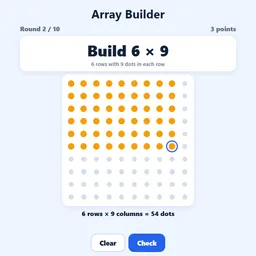
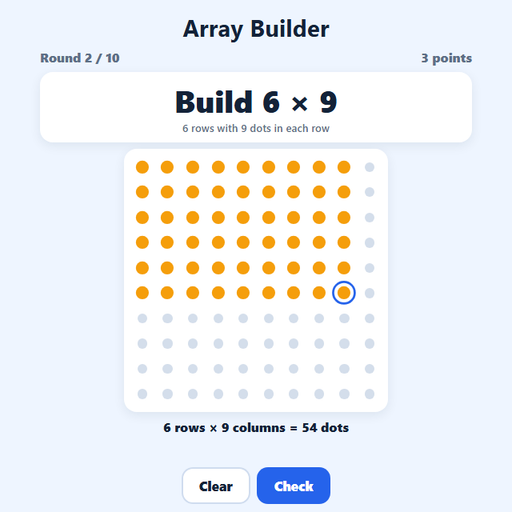
Before memorizing anything, a child should know that 4 × 3 means four groups of three. Draw four circles with three dots in each, or lay out an array of four rows and three columns. Counting the dots gives 12. Once the idea is clear, the facts are no longer random numbers. They are shortcuts for adding equal groups. Array Builder lets kids build these rectangles of dots on screen and count them.
Step 2: Start with the easy tables
The 1s, 2s, 5s and 10s tables each follow a pattern a young child can see right away. Any number times 1 stays the same. The 2s are doubles. The 5s end in 0 or 5. The 10s just add a zero. Together these four tables cover a large share of the chart.
Step 3: Add the 3s, 4s and 9s
The 4s are double the 2s: if 2 × 7 is 14, then 4 × 7 is 28. The 9s have a digit trick, explained below. The 3s take a little more practice, but skip counting by 3s (3, 6, 9, 12, 15) gets most kids there quickly.
Step 4: Finish with the 6s, 7s, 8s, 11s and 12s
By now most of these facts are already known from earlier tables. The ones that remain, such as 6 × 7, 6 × 8, 7 × 8 and 8 × 8, are the facts that trip up students most often. Give them extra time and extra games.
Step 5: Mix it up
Practicing one table in order is useful for learning, but real fluency means answering any fact in any order. Once a table feels comfortable, switch to shuffled or mixed practice. That is the point where the facts move from counting to memory.
Tricks for Every Times Table
Patterns make facts easier to remember and easier to check. Here are the ones we teach most often.
- 0s table: any number times zero is zero. Zero groups of anything is nothing.
- 1s table: any number times one is itself.
- 2s table: double the number. 2 × 8 is 8 + 8, which is 16.
- 3s table: double the number, then add one more group. 3 × 7 is 14 + 7, which is 21.
- 4s table: double, then double again. 4 × 6 is 12 doubled, which is 24.
- 5s table: answers end in 0 or 5. Half of the number times 10 also works: 5 × 8 is half of 80, which is 40.
- 6s table: with an even number, the answer ends in the same digit. 6 × 4 = 24, 6 × 6 = 36, 6 × 8 = 48.
- 7s table: this one needs the most practice. Learn 7 × 7 = 49 and 7 × 8 = 56 first, since the rest are often known from other tables.
- 8s table: double three times. 8 × 6 is 6, then 12, then 24, then 48.
- 9s table: the tens digit is one less than the number you multiply by, and the two digits add to 9. For 9 × 7, the tens digit is 6, and 6 + 3 is 9, so the answer is 63. The finger trick works too: hold up ten fingers and fold down the seventh.
- 10s table: add a zero to the end.
- 11s table: up to 9, repeat the digit (11 × 4 = 44). For 11 × 11 and 11 × 12, remember 121 and 132.
- 12s table: multiply by 10, then add two more groups. 12 × 7 is 70 + 14, which is 84.
A memory rhyme helps with the hardest fact: “5, 6, 7, 8” reminds you that 56 = 7 × 8.
How to Use the Multiplication Chart
The multiplication chart above shows every fact from 1 × 1 to 12 × 12. To find a product, pick a number in the top row and a number in the left column. The square where that column and row cross holds the answer. On a computer you can hover over any square to light up its row and column.
The chart is also a great way to spot patterns. Every row goes up in equal steps. The chart is symmetric across the diagonal from the top left to the bottom right, which shows that order does not matter in multiplication. The numbers on that diagonal, 1, 4, 9, 16, 25 and so on, are the square numbers. Ask your child to find all the places where 24 appears, or to color every even number, and the chart turns into a puzzle.
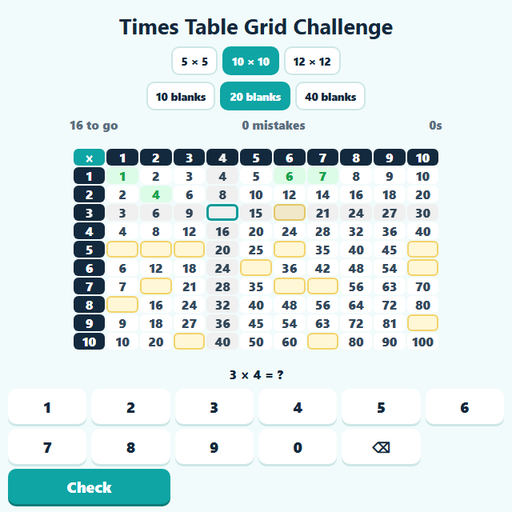
Using the chart to look things up is fine while learning. The goal, though, is to need it less over time. When a fact can be answered without the chart, it is learned. The Times Table Grid Challenge turns this into a game by hiding squares and asking you to fill them back in.
Free Multiplication Games on Multiplication.com
Every game in our multiplication games collection was written for this site, and each one trains a slightly different skill. Here is how they fit together.
Games for learning new facts
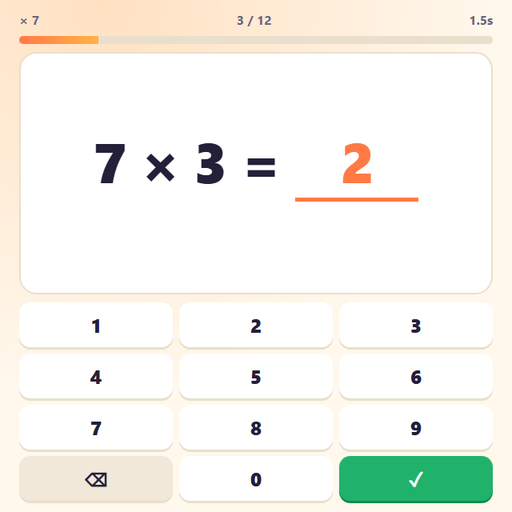
Times Table Practice is where most kids should start. Choose a single table, answer its twelve facts in order or shuffled, and earn up to three stars. A list of missed facts at the end shows exactly what to review.
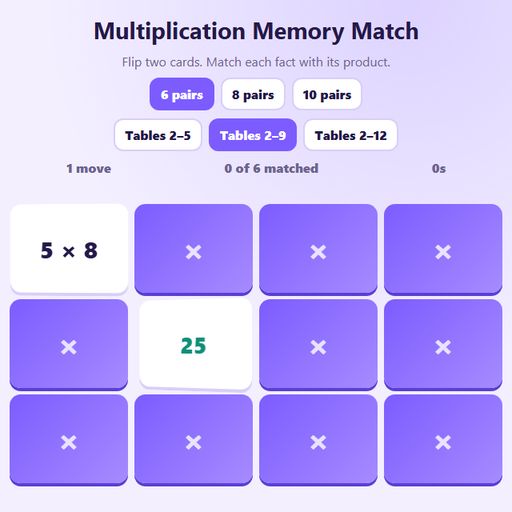
Multiplication Memory Match is a calm card game. Flip two cards at a time and pair each fact with its product. Seeing 6 × 9 and 54 together again and again builds a direct link in memory.
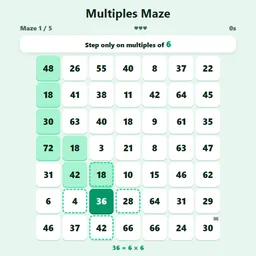
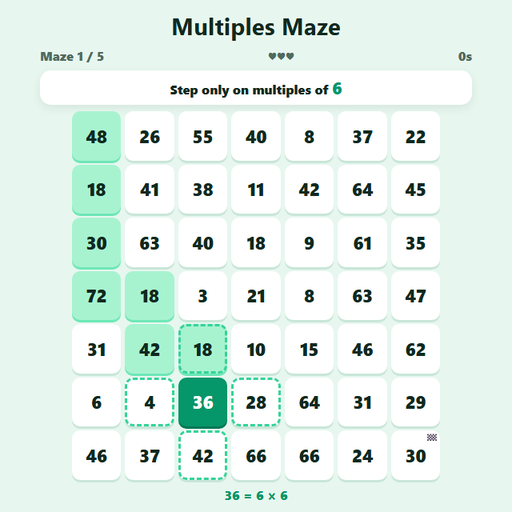
Array Builder comes even earlier: kids drag across a grid to build rows and columns of dots, which shows what 4 × 6 means before any memorizing starts. Multiples Maze then turns skip counting into a route-finding puzzle.
Games for review and patterns
The Times Table Grid Challenge fills in a multiplication chart with missing squares. Because the row and column light up for each blank, kids notice how the tables relate to each other, and wrong answers get a skip-counting hint.
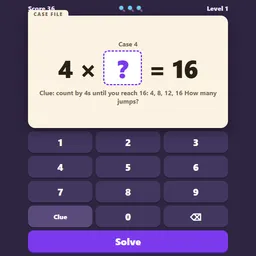
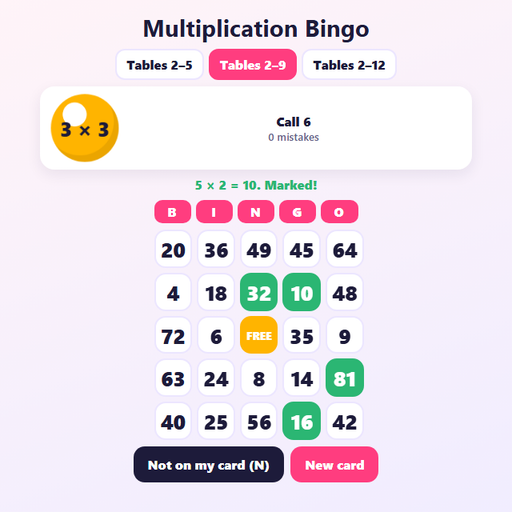
Multiplication Bingo calls out facts for kids to find on a 5 × 5 card. Missing Factor Mystery hides one number in each fact, as in ? × 8 = 48, and later mixes in division, so kids practice whole fact families.
Games for speed
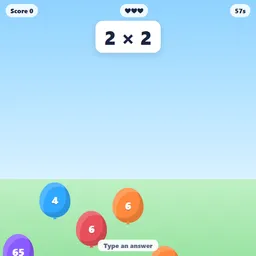
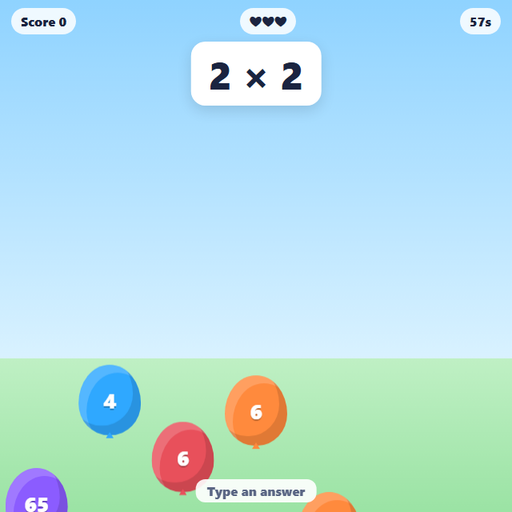
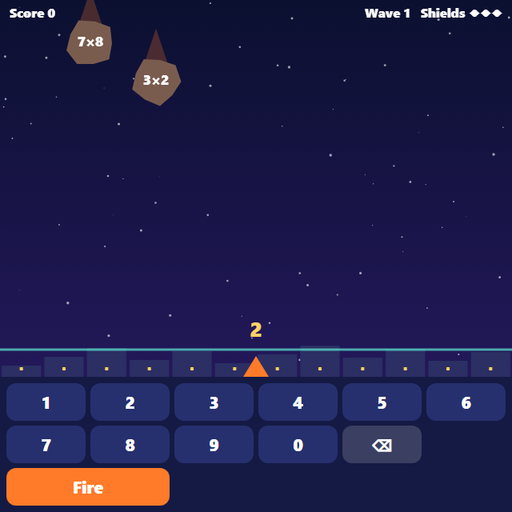
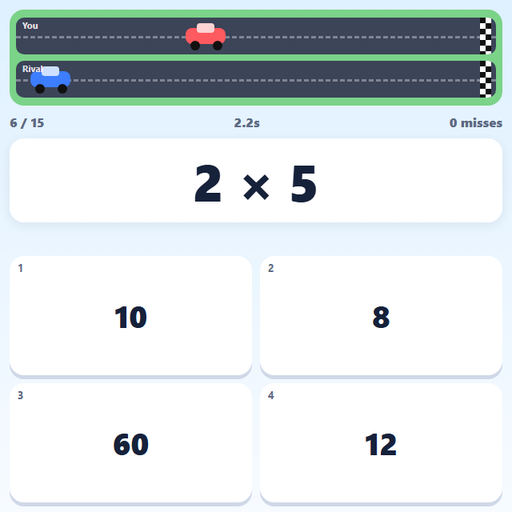
Once the facts are mostly known, speed games help make them automatic. Multiplication Balloon Pop is a 60-second round where you pop the balloon showing the right answer. Multiplication Race moves your car forward with every correct answer while a rival drives at a steady pace. Multiplication Meteors is the hardest of the set: type the product of each falling meteor before it reaches the city.
Games for two players and strategy
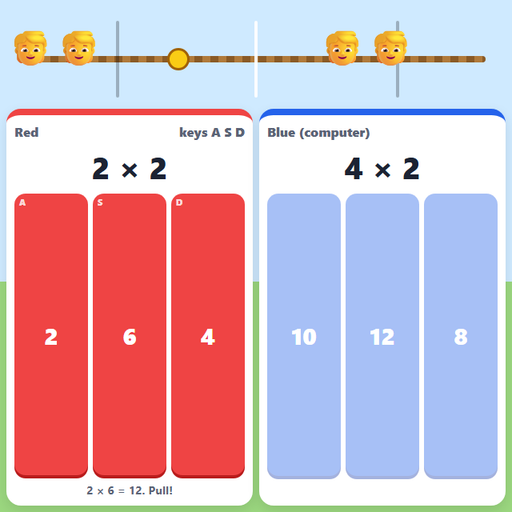
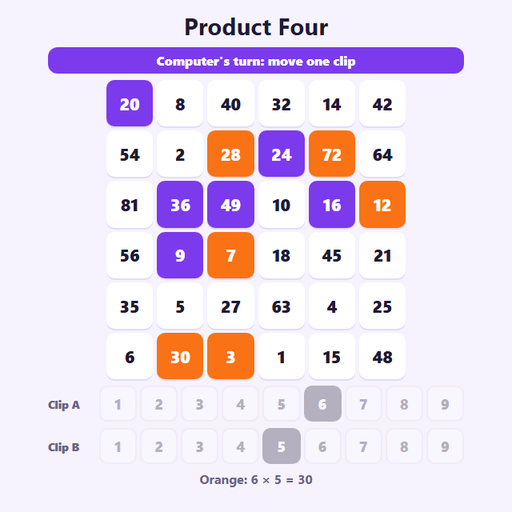
Multiplication Tug of War puts two players on one screen, each pulling a rope with correct answers, or one player against the computer. Product Four is a calm strategy game: move a clip on a 1 to 9 strip, claim the product on the board, and try to get four in a row before your opponent does.
For variety, the site also hosts a wider library of free browser games, including number puzzles such as Math Sprint Game, Factors Game and 2048. They make a good reward after a practice session.
A 10-Minute Daily Practice Plan
Research on learning keeps finding the same thing: short, spaced practice beats long, rare sessions. Here is a routine that takes about ten minutes and works for most children.
- Warm up for two minutes. Play a round of Times Table Practice on a table your child already knows well. Starting with success sets a positive tone.
- Learn for four minutes. Work on the current target table. Play it in order until three stars come easily, then switch to Shuffled.
- Review for two minutes. Play one Memory Match board or a small Times Table Grid that includes older tables, so earlier facts are not forgotten.
- Finish fast for two minutes. End with Balloon Pop, the race or Meteors. Ending on an exciting game makes tomorrow’s session easier to start.
Move to the next table only when the current one feels easy in shuffled order. Most children need one to two weeks per table, and less for the easy ones. Keep a simple chart on the fridge and color in each table as it is mastered.
Tips for Parents
You do not need to be a math expert to help. A few habits make a big difference.
- Keep it short. Stop while your child still wants to keep going. That eagerness carries into the next session.
- Praise effort and strategy. “You doubled the 4s to get the 8s, smart” helps more than “You’re so clever.”
- Talk through mistakes calmly. Every game here shows the correct fact after a miss. Read it aloud together and move on.
- Use everyday moments. Count packs of juice boxes, wheels on cars in a parking lot, or legs on spiders. Real groups make the idea concrete.
- Track the tricky facts. Most kids have five or six facts that keep causing problems. Write them on sticky notes and put them somewhere you both see every day.
Tips for Teachers
Multiplication.com works well in a classroom. The games run on Chromebooks and tablets without installation, have no chat or ads, and do not collect student data. Here are a few ways teachers use them.
- Morning warm-up: project Times Table Grid Challenge and fill blanks as a class, asking students to explain how they found each answer.
- Learning stations: set one station to Memory Match on the current table and another to Times Table Practice.
- Fluency check-ins: have students play the same Times Table Practice table once a week and record their stars and time.
- Early finishers: Balloon Pop and Meteors are quick, self-contained rounds that do not disturb the rest of the class.
Multiplication.com FAQ
Is Multiplication.com free?
Yes. Every game, the multiplication chart and all the tips on Multiplication.com are free. There is no sign-up, subscription or in-game purchase.
What age is Multiplication.com for?
The games suit children from about age 7, when multiplication is usually introduced, through age 11 or 12. Older students and adults who want to refresh their facts are welcome too.
What is the fastest way to learn the times tables?
Learn the easy tables first (1, 2, 5 and 10), use patterns and the commutative property to cut down the work, and practice a little every day. Short daily games beat long weekly drills.
Which times tables are the hardest?
The 6s, 7s and 8s cause the most trouble, especially 6 × 7, 6 × 8, 7 × 8 and 8 × 8. Give these facts extra review once the other tables are solid.
Do the games work on a phone, tablet or Chromebook?
Yes. Every multiplication game has large touch buttons or an on-screen keypad, and also works with a keyboard and mouse. Any modern browser will do.
Does Multiplication.com save my child’s progress?
Best scores and stars are saved in your browser on the device you use. Nothing is sent to us, and clearing your browser data resets them.
Do the games have ads or chat?
No. The games contain no ads, chat, links to other sites or tracking scripts, so they are safe for children to play on their own.